

Government approval of Stockport's SEND plan unlocks about £61.2m towards its £67.9m schools deficit. Only 18% of new EHC plans met the 20-week limit in 2025.
The government has approved Stockport Council’s three-year plan for children with special educational needs and disabilities (SEND). The approval matters for more than the plan itself. It is the condition for a one-off government grant worth about £61.2m, which would wipe out most of the borough’s accumulated deficit on SEND spending.
The council announced the approval on 15 October. Its release does not mention the money. The figures are in two council reports published in the past fortnight.
The money behind the approval
Councils pay for SEND support from the high needs part of the Dedicated Schools Grant (DSG). In Stockport, as in most of England, spending has run ahead of that grant for years. The overspend sits in a separate account on the council’s books.
A report to the Schools Forum on 8 October sets out the position:
| £m | |
|---|---|
| Accumulated deficit at 31 March 2026 | 67.850 |
| High Needs Stability Grant (estimate, 90% of the above) | -61.065 |
| Forecast overspend this year, 2026/27 (first quarter) | 32.006 |
| Forecast deficit at 31 March 2027 | 38.791 |
The forecast for March 2027 is before any further government help. The same report says the council submitted its plan “to access and hopefully receive” the first payment of the grant.
A SEND update to the Children and Families Scrutiny Committee on 14 October explains the terms. The government will pay up to 90% of each council’s deficit as it stood on 31 March 2026, but only once it has approved the council’s Local Area SEND Reform Plan. For Stockport that is “currently estimated at around £61.2m”.
That leaves the council about £6.8m to cover itself. The report says the government has not confirmed how. Options could include the council’s own reserves or, with government permission, a capitalisation direction, which lets a council pay a day-to-day cost from capital money.
Nothing has yet been agreed for the deficits building up this year and next. The scrutiny report gives this year’s forecast in-year DSG overspend as £26m. The Schools Forum table, prepared on a different basis, gives £32m.
What the plan says will change
The council says the plan focuses on help earlier, more inclusive schools, easier access to specialists and more support closer to home. The scrutiny report lists the main strands, including:
- more support for pupils with SEND inside mainstream schools
- inclusion bases within mainstream schools, and more local specialist places
- more access to therapies, and earlier identification of need
- more outreach from alternative provision
- extra training and specialist advice for school staff
The delivery vehicle is “Experts at Hand”, a national scheme to bring specialists such as educational psychologists and therapists into schools. Stockport’s allocation is £2.1m this year, with about £3.8m and £4.3m indicated for the next two years. Mainstream schools also get £1.7m this year, and early years settings £250,000, from the government’s new inclusion funding.
According to the scrutiny report, five pilot “inclusion partnerships” of neighbouring schools have been set up. The first meetings were due at the end of September. The council has also:
- commissioned statutory educational psychology advice from outside, freeing its own psychologists for earlier work
- advertised new dispute resolution officer posts to support families in disagreements
- put the SEND information, advice and support service (SENDIASS) out to tender
The 20-week problem
When a council agrees to make an education, health and care plan (EHCP), the law gives it 20 weeks from the request to issue the final plan. Stockport has been among the slowest councils in England at meeting that limit.
Department for Education figures for 2025 show:
- Stockport issued 538 new plans, and 18.0% of them within 20 weeks
- the figure for England was 45.5%, and for the North West 42.7%
- the average new plan in Stockport took 36.9 weeks
- 16.4% took more than a year
That ranks Stockport 133rd of the 150 councils with a published figure. It is an improvement on 2024, when only 7.8% of plans were on time and 30.4% took more than a year.
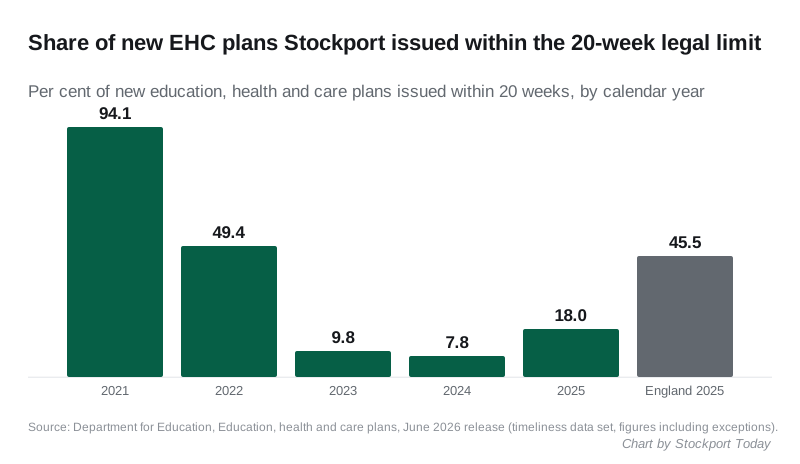
The scrutiny report says outside educational psychology advice was commissioned partly to improve statutory timeliness. It does not give a target.
The same report gives better news on results. Provisional 2026 figures show Stockport pupils with an EHCP ahead of the national average in reading (30.9% against 20.7%), writing and maths. The weakest area is the early years, where 3.0% of children with an EHCP reached a good level of development, against 5.1% nationally.
What it means for you
- Nothing changes overnight. The council says the approval “does not mean any immediate changes to existing SEND support or statutory rights”. EHCPs and the current law stay as they are.
- Your rights to an assessment and a plan are unchanged. If your child is waiting for a plan beyond 20 weeks, the Stockport Local Offer explains how to contact the SEND team and the independent advice service.
- The deficit is not a cut to your child’s support. The grant clears most of an old overspend. How the remaining £6.8m, and this year’s overspend, are paid for is still undecided.
The council says it will keep families updated as both its plan and the national reforms develop. The scrutiny report says the plan’s impact will be reported back to councillors over time.
Have your say